


Dachstein Crossing Austria's National Ski Tour


The Dachstein Crossing, also known as Austria’s National Ski Tour, is one of the classic ski crossings in the Alps. The tour winds through the impressive high-alpine landscape of the Dachstein and combines a physical challenge with extraordinary experiences of nature.
Over a distance of about 25 km, you’ll experience a varied route through the UNESCO World Heritage Site surrounding the Dachstein. Depending on snow, weather, and trail conditions, the crossing is usually possible between February and April using touring skis or alpine skis.
Since you’ll be traveling through high-alpine terrain, careful trip planning, appropriate gear, and alpine experience are essential. Be sure to check the current route status, weather conditions, and snow conditions before setting out.
Tip: For the return trip, there’s a shuttle service via the Planai buses from Obertraun back to the starting point. Advance registration is required.
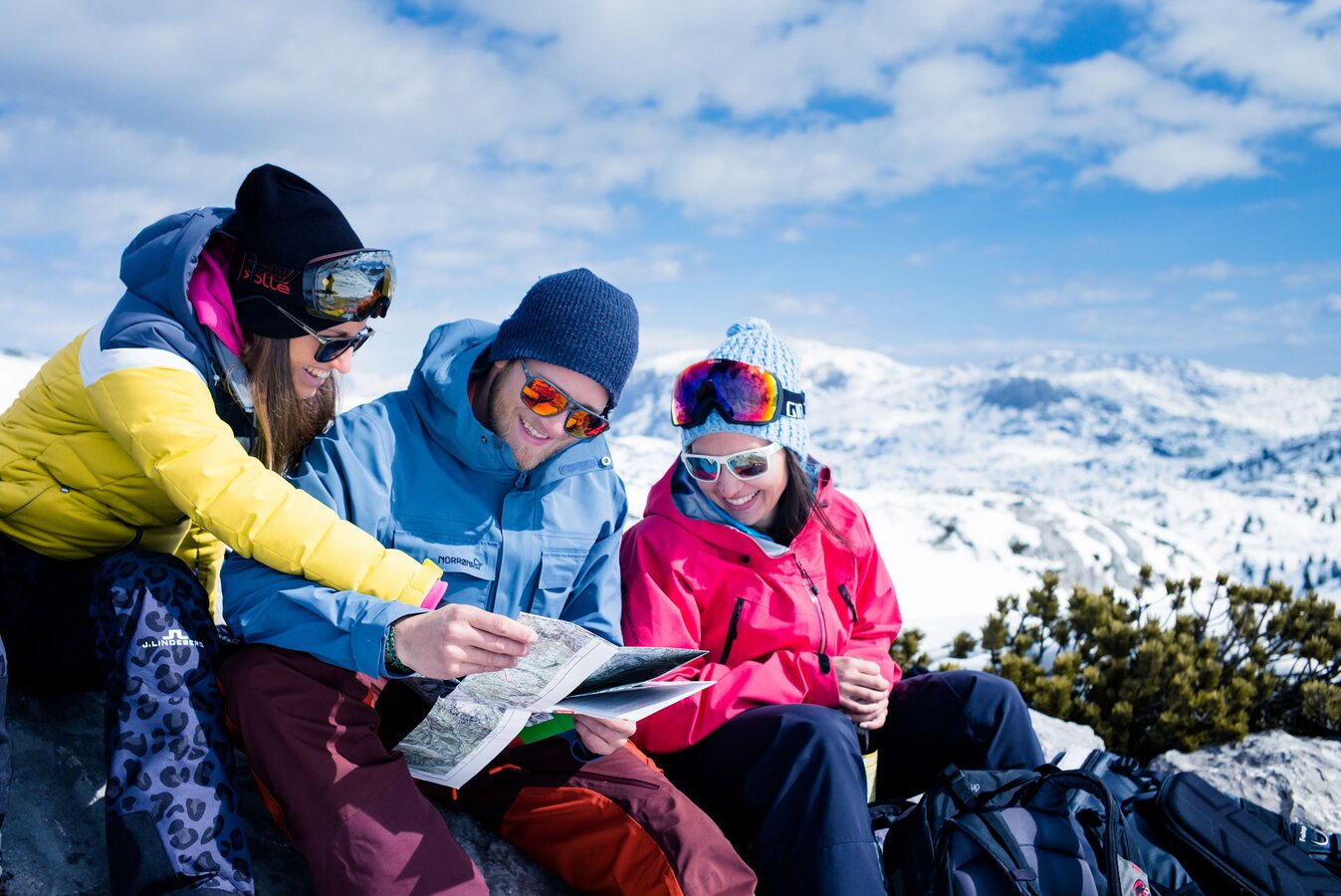
All the information at a glance:
- Start: Dachstein Mountain Station, 2,700 m
- End: Obertraun, 600 m
- Distance: approx. 25 km
- Duration: approx. 5:30 h
- Elevation gain: 200 m ascent / 2,200 m descent
- Difficulty: red, with black alternatives
- Season: February through April, depending on snow conditions
- Route: via the Hallstatt Glacier, Simony Hut, and Gjaidalm
- Return transfer: Planai Bus Service / RVB, registration required
- Important: Check the weather, snow conditions, avalanche conditions, and route status in advance
Roof Stone Crossing
Route Description
The Dachstein Crossing is the classic ski traverse of the Dachstein massif from south to north. It is one of the most famous ski tours in the Alps and is relatively easy from a technical standpoint. Touring skis are not strictly necessary for the classic route. Under the right conditions, it can also be skied on alpine skis.
From the Dachstein mountain station, you’ll first ski down the marked route to just below the Dirndl. This is followed by a short climb toward the Seethalerhütte, during which you’ll have to carry your skis. At the marked junction toward the Simonyhütte, the descent begins along the western edge of the Hallstatt Glacier. The Simonyhütte offers a place to stop for refreshments. From there, the route continues with short uphill sections to the Gjaidalm, where you can also stop for refreshments. This is followed by a short climb to Oberfeld. Afterward, the ski descent continues toward Obertraun.
Downhill Run and Current Status
Whether the downhill run to Obertraun is possible depends on current snow conditions and the operating status of the Dachstein Krippenstein Cable Car. Especially starting in April, you should check before your tour whether the valley descent is still open. If the descent is no longer possible, continue via the Krippenstein by cable car to Obertraun. Please note the current operating hours and any additional costs.
Route Variations
There are various options along the Dachstein crossing. Appropriate hiking gear is required for these. Possible options include:
- Descent to the Eissee followed by an ascent to the Simonyhütte
- Ascent to the Hoher Trog and descent through the Weittal valley to Hallstatt
- Detour to the Wiesberghaus
- Descent through the Echerntal valley to Hallstatt via the Tiergarten route
Return Trip
Planai Bus and RVB offer transfer services for the return trip to the starting point. Be sure to check the schedules and availability well in advance. Advance reservations are required.
Safety Notice
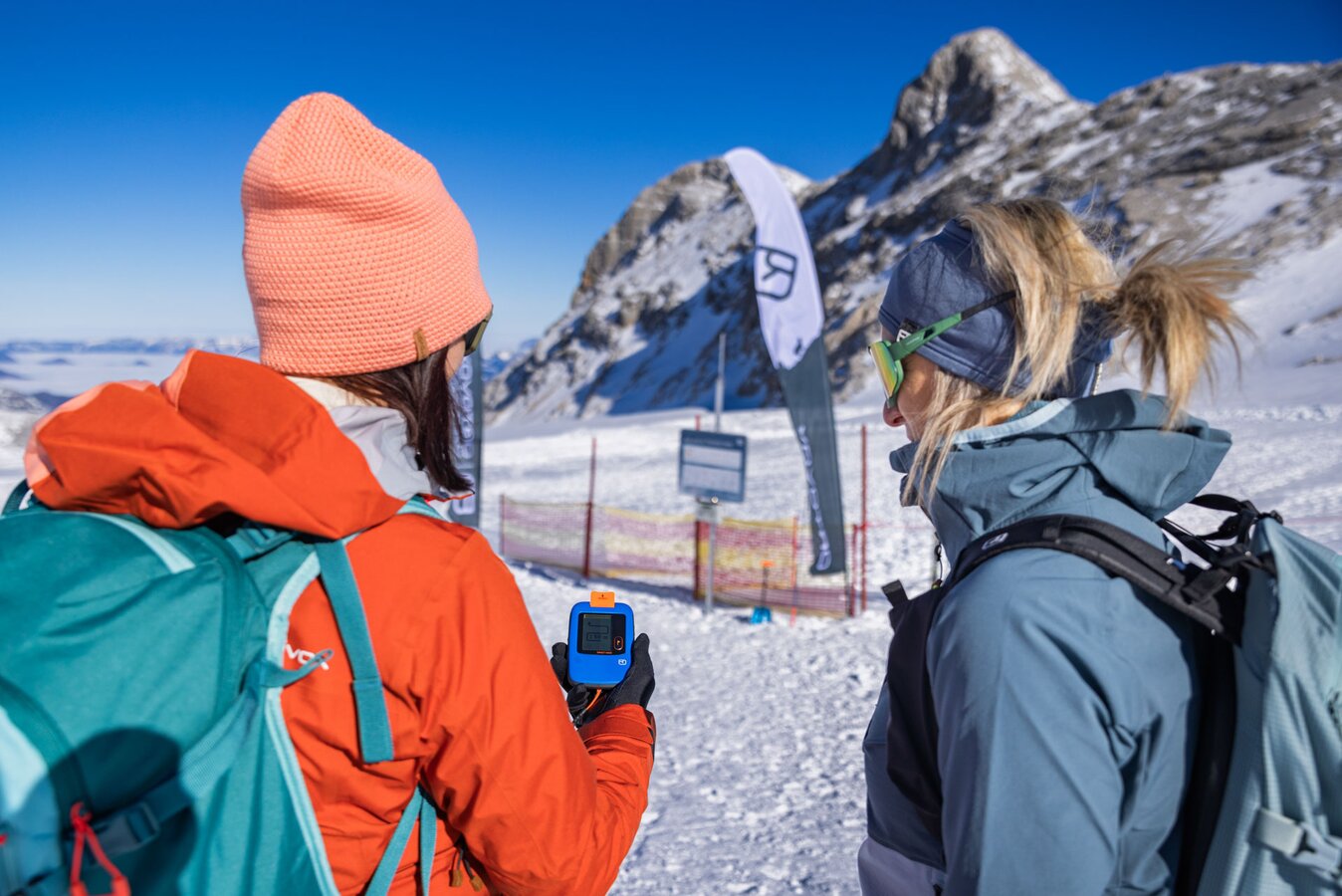
Most of the routes listed are unmarked and lead through open ski terrain and high-alpine terrain. They require careful route planning, knowledge of avalanche conditions, very good local knowledge, and the appropriate safety equipment.
For these off-piste routes, we strongly recommend being accompanied by a mountain and ski guide who is familiar with the area. Please also note that the physical demands of these off-piste routes can be significantly higher.


