


Ski touring at the Dachstein Glacier


Between a Nature Experience and a Physical Challenge
The Dachstein Glacier offers impressive opportunities for anyone who wants to experience the high-alpine mountain world on skis. When ski touring, you climb the elevation under your own power while enjoying breathtaking views of the surrounding mountains. With climbing skins attached to your skis, you make your way uphill step by step. Whether you’re looking for ski tours on groomed trails or more challenging off-piste tours: depending on your experience and skill level, you’ll find a variety of options for your personal touring experience on the Dachstein.
Safety and Gear for Your Ski Tour
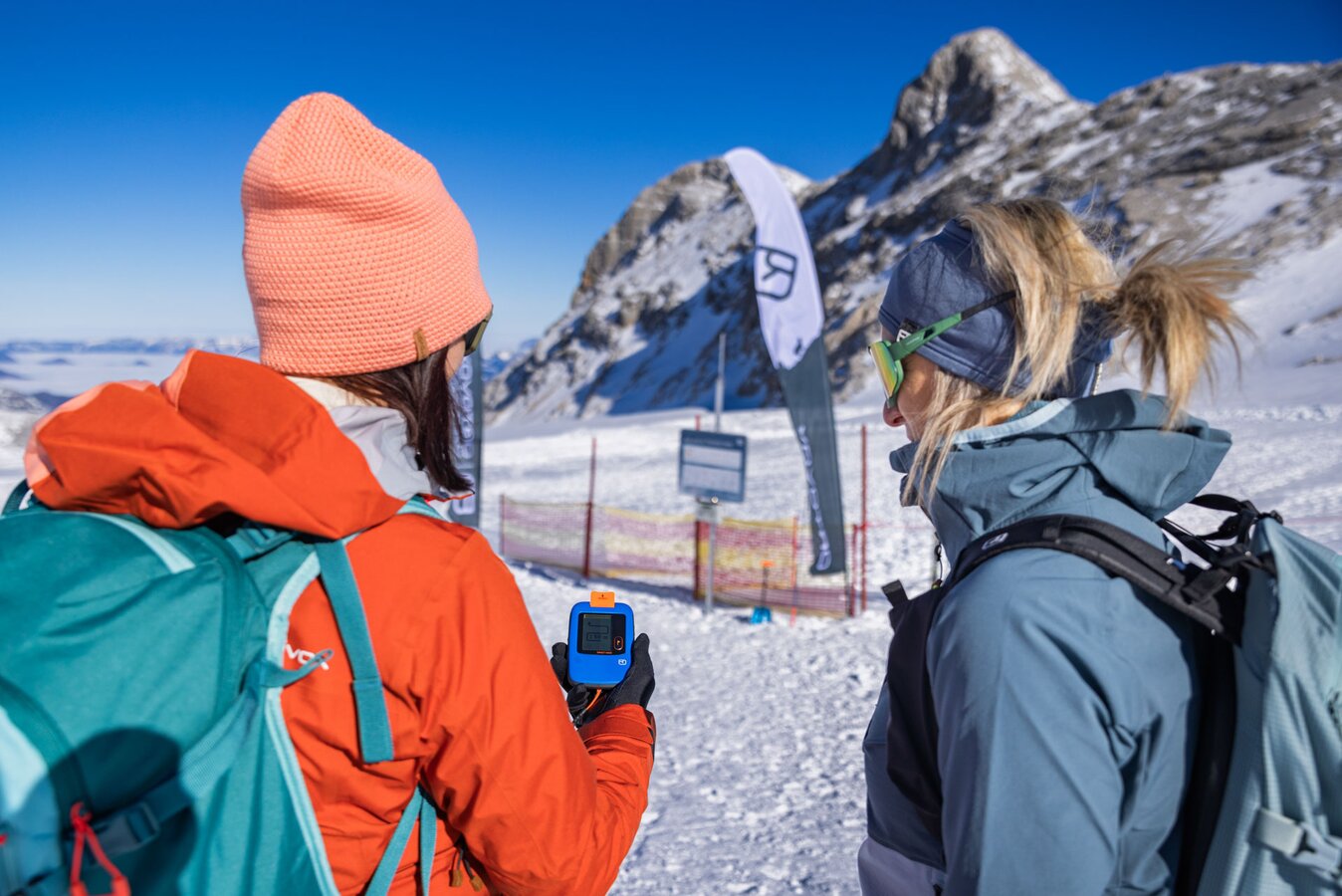
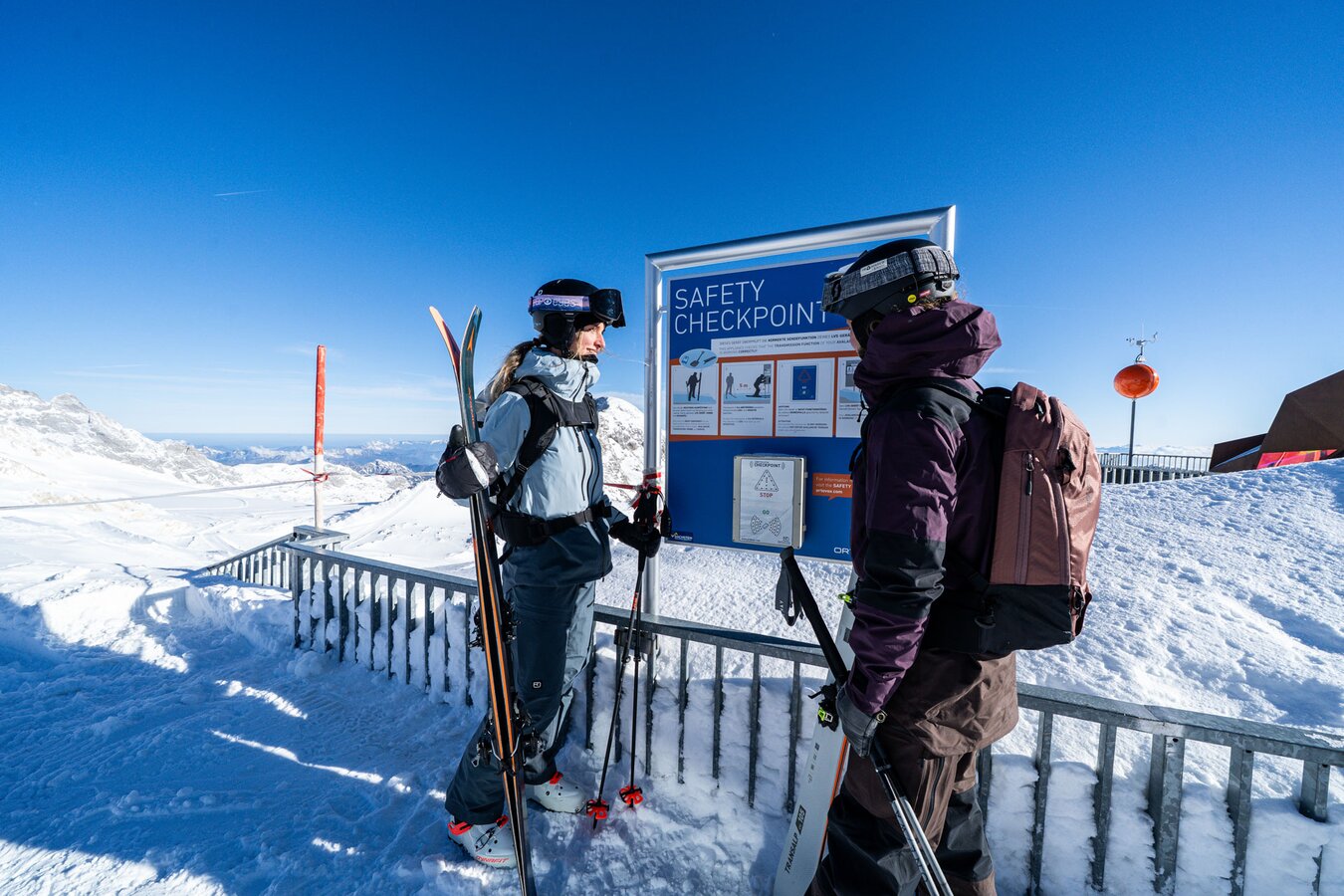
In high-alpine terrain, weather, visibility, and snow conditions can change rapidly. Therefore, check the current conditions before every tour and plan your route according to your skill level. For tours in open terrain, alpine experience, appropriate touring gear, and knowledge of how to use safety equipment are essential. This includes, in particular, an avalanche transceiver, probe, and shovel. An avalanche transceiver checkpoint is available near the Dachstein mountain station, where you can check the transmission function of your avalanche transceiver before setting out.


Train Safely at the Ortovox Training Park
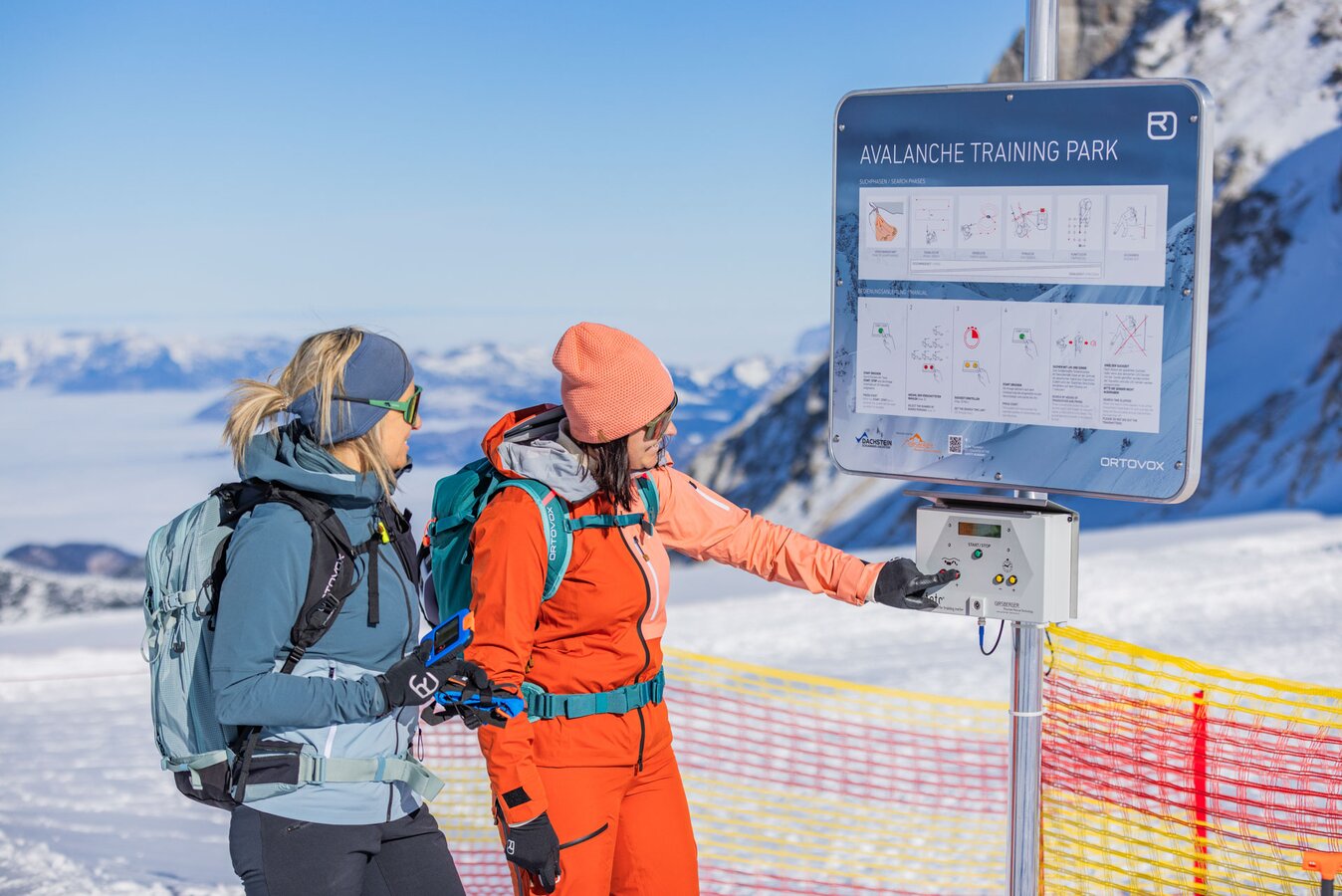
At the Ortovox Training Park on the Dachstein Glacier, you can practice using your avalanche safety equipment under realistic conditions. Six permanently installed transmitters enable a variety of avalanche burial scenarios— ideal for anyone who wants to gain more experience in handling emergencies while ski touring or freeriding. The program is complemented by the avalanche transceiver checkpoint, where you can have your avalanche transceiver checked.
Avalanche Transceiver Checkpoint
With the avalanche transceiver checkpoint near the Dachstein mountain station, you cancheck whether your avalanche transceiver is transmitting. A visual and audible signal provides immediate feedback. For ski tours and freeride excursions in open terrain, a functioning avalanche transceiver, probe, and shovel are essential safety equipment. Checking your gear before you set out helps you ensure it’s in working order—but it doesn’t replace the necessary experience and proper handling of the equipment.


